Happy Camper Vintage Trailer: A Design Asset for Road-Ready Branding
Understanding the Visual Character of the Font
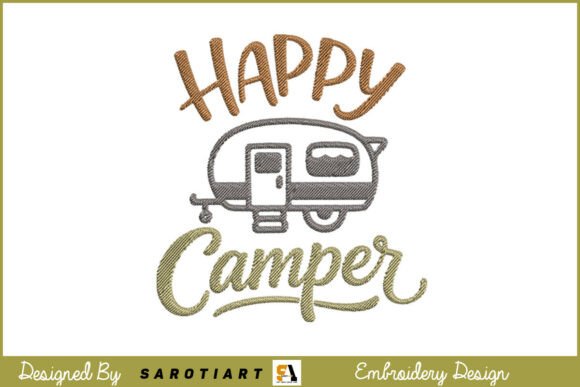
The Happy Camper Vintage Trailer typeface is more than just a collection of letters; it is a narrative tool. At first glance, the design captures a specific, nostalgic moment—the open road and the comfort of a classic teardrop trailer. The visual hierarchy is established immediately through a dual-font structure. You have the word "HAPPY" rendered in a rustic, wood-textured block font that feels heavy, grounded, and tactile. It suggests stability and the rugged outdoors. Contrasting this is "Camper," written in an elegant, flowing sage green script. This portion introduces movement, fluidity, and a touch of sophistication.
The color palette is intentionally restrained, utilizing a sophisticated charcoal grey and white. This ensures the design remains versatile and does not clash with complex backgrounds. The "Happy Camper Vintage Trailer" aesthetic is not about loud, neon camping vibes; it is about a curated, artisanal feel. The fill and satin stitch details suggest this was originally crafted for embroidery, giving it a textured, handmade quality that digital-only fonts often lack. This texture is crucial for brands trying to bridge the gap between digital presence and physical products.
Strategic Applications in Modern Branding
When we talk about brand identity, we are looking for assets that tell a consistent story. The Happy Camper Vintage Trailer design is exceptionally effective for niche markets but requires careful deployment. It is a display font at heart, meaning it is designed to be seen, not necessarily to be read in long paragraphs. For a small business owner running a glamping site, a van conversion company, or a boutique outdoor gear shop, this typeface becomes the cornerstone of their visual voice.
Consider the application in packaging design. If you are selling artisanal campfire coffee or handmade hiking soap, the wood-block "HAPPY" grounds the product in tradition, while the script "Camper" adds a premium, crafted feel. In web design, this should be reserved strictly for hero images, landing page headers, or specific call-to-action graphics. It is not a sans serif font meant for body copy, nor is it a standard serif font for articles. It is a creative font that demands attention.
For social media graphics, the design shines on platforms like Instagram or Pinterest where visual storytelling is paramount. A "Happy Camper Vintage Trailer" graphic placed over a moody photo of a misty forest creates an immediate emotional connection. It signals to the viewer that this brand values aesthetics, nature, and a slower pace of life. Entrepreneurs and content creators can use this to build a cohesive feed that feels curated rather than chaotic.
Technical Evaluation and Pairing Strategies
One of the most common mistakes in modern typography is using a premium font like the Happy Camper Vintage Trailer in isolation or paired with another overly decorative typeface. Because this design has such a strong personality—mixing block letters with script—it acts as the "loud" voice in your layout. To maintain readability and visual hierarchy, it must be paired with a neutral companion.
A clean sans serif font is usually the best counterpart. Think of typefaces like Montserrat, Lato, or Open Sans. These provide the "silence" needed for the Happy Camper Vintage Trailer to speak. If you are working on editorial design, such as a magazine spread about road trips, use the Happy Camper Vintage Trailer for the pull quotes or the feature title, but stick to a legible serif font for the body text. This contrast creates a professional rhythm that guides the reader's eye.
Practical Testing and Licensing
Before finalizing any logo design or product line, you must test the font pairing in context. Type out the specific words you intend to use. The "HAPPY" block letters and the "Camper" script are designed to balance each other, but if your brand name is "Happy Hikers," the visual weight might shift differently than "Happy Campers." Review the included styles and alternates if available; sometimes a slightly different curve on a 'C' or 'H' makes all the difference in legibility.
Regarding commercial font usage, verify the licensing terms. Since this is a design asset with embroidery roots, ensure the digital license covers your intended use, whether that is for print merchandise, digital web design, or logo design. A creative font of this quality is an investment in your brand's perceived value. It moves your project away from generic templates and toward a custom, artisanal identity that resonates with the adventurous spirit of your audience.
Ultimately, the Happy Camper Vintage Trailer is a tool for connection. It bridges the gap between the rugged outdoors and the comfort of a well-designed space. For designers and marketers, it offers a way to inject personality and warmth into projects without sacrificing sophistication. Use it to evoke the freedom of the road, but always ground it with solid typography principles to ensure your message is not just seen, but understood.